For decades, nuclear fusion has existed in the public imagination as the holy grail of energy production a tantalizingly clean, safe, and nearly limitless source of power, perpetually just over the horizon. Phrases like “star power” and “imitating the sun” captured its promise but also underscored its perceived distance from practical reality. However, a seismic shift is now underway. A series of profound scientific breakthroughs, marked by historic achievements in both laser and magnetic confinement, have catapulted fusion from the realm of pure research into the fiercely competitive arena of commercial development. This transition represents more than a technical milestone; it heralds the potential dawn of a new energy era. This comprehensive analysis delves into the recent victories that have redefined possibility, explores the multifaceted path to commercialization, examines the monumental benefits and persistent challenges, and forecasts the transformative impact this technology could have on our global society, economy, and environment.
I. Decoding the Breakthroughs: The Scientific Leaps That Changed Everything
The journey to commercial fusion hinges on mastering two critical parameters: achieving “ignition” and generating net energy gain. Recent years have delivered landmark successes on both fronts, providing the concrete proof-of-concept that has ignited the commercial sector.
A. The National Ignition Facility (NIF) and the Ignition Milestone
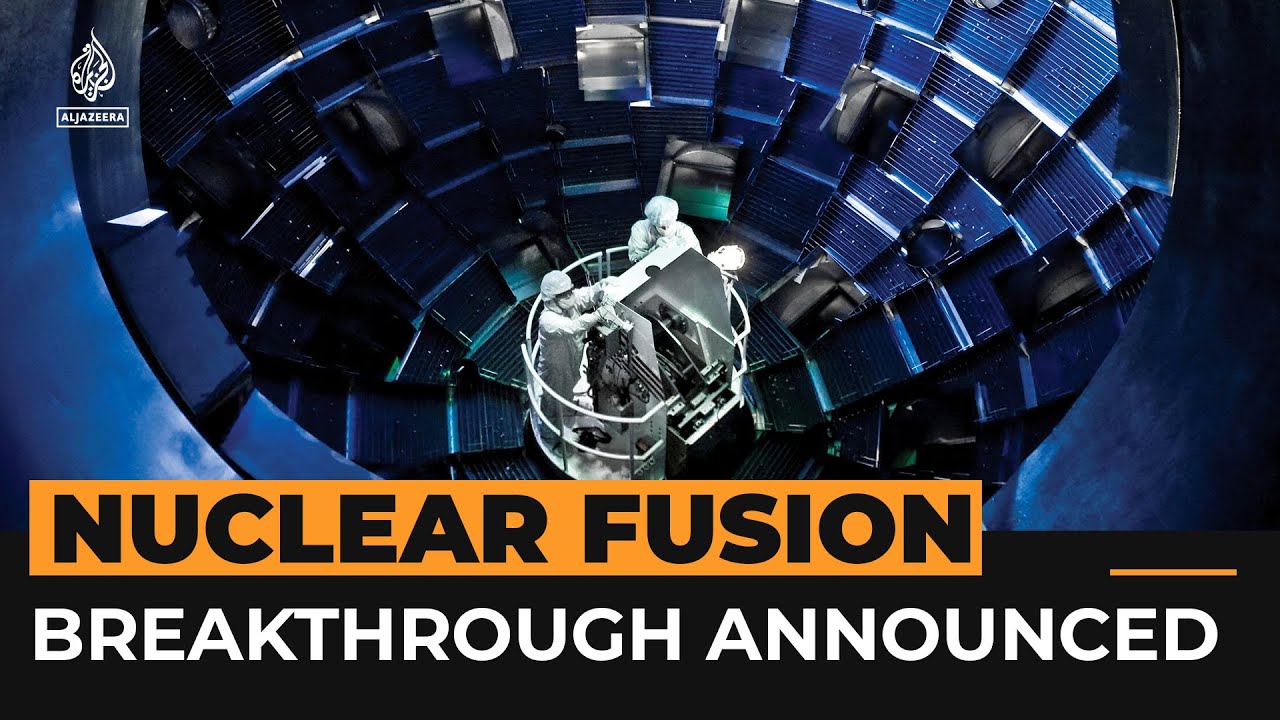
In December 2022, scientists at Lawrence Livermore National Laboratory’s NIF achieved a watershed moment: fusion ignition. Using the world’s most powerful laser system, they blasted a tiny capsule of hydrogen isotopes (deuterium and tritium) with 192 laser beams. This implosion created, for a fraction of a second, conditions hotter and denser than the sun’s core, causing the atoms to fuse and release a burst of energy. Crucially, the fusion reaction produced more energy (approximately 3.15 megajoules) than the laser energy delivered to the target (2.05 megajoules) a net energy gain. This was the first-ever controlled fusion experiment to cross this threshold, providing undeniable physical validation that the process can be a net producer of energy.
B. Tokamak Supremacy and the ITER Project
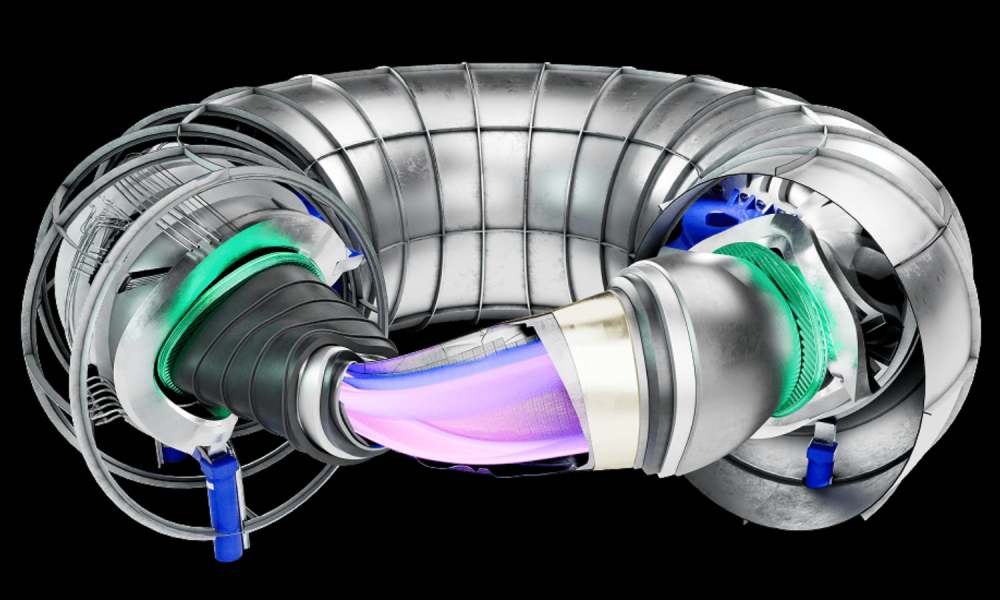
Parallel to NIF’s success, the magnetic confinement approach, primarily using doughnut-shaped devices called tokamaks, has made staggering progress. The crown jewel of this effort is the International Thermonuclear Experimental Reactor (ITER), a massive multinational project under construction in France. While ITER itself aims for first plasma in the coming years, existing tokamaks like the Joint European Torus (JET) in the UK have set their own records. In 2022, JET sustained a fusion reaction for five seconds, producing a groundbreaking 59 megajoules of energy, nearly doubling its own previous record and demonstrating unprecedented plasma stability. These experiments prove the feasibility of sustaining the super-hot plasma necessary for continuous power generation, a key requirement for a commercial power plant.
C. The Private Sector Surge
Perhaps the most telling sign of fusion’s commercial turn is the influx of capital and innovation from private companies. Over forty startups, backed by billions in venture capital and investments from tech billionaires, are pursuing an astonishing array of alternative approaches. These include:
-
Advanced Tokamaks: Companies like Commonwealth Fusion Systems (CFS) are leveraging new high-temperature superconducting magnets to build smaller, more powerful, and more efficient tokamaks than previously thought possible.
-
Stellarators: Projects like Wendelstein 7-X in Germany (research) and private efforts aim to use complex, twisted magnetic coils to contain plasma more stably than tokamaks, potentially allowing for continuous operation.
-
Magnetic Pinch and Field-Reversed Configurations: Companies such as Helion Energy are developing linear devices that compress plasma with magnetic fields to achieve fusion, with designs targeting direct electricity conversion.
-
Laser and Pulsed Power Approaches: Inspired by NIF, firms like First Light Fusion are pursuing simpler, lower-cost methods of triggering fusion through projectile impact or pulsed power.
This diversification of technological pathways significantly de-risks the overall venture and accelerates the timeline for a viable pilot plant.
II. The Roadmap to Commercialization: Engineering the Impossible

Crossing the scientific threshold of net gain is just the first step. The path to a reliable, grid-connected fusion power plant involves solving a series of profound engineering and materials challenges. The commercialization roadmap can be viewed as a multi-stage rocket.
A. The Materials Frontier: Containing a Mini-Sun
The interior of a fusion reactor will be the most hostile environment ever engineered on Earth. Materials facing the plasma must withstand extreme neutron bombardment, intense heat fluxes, and cyclical thermal stresses without degrading.
-
First Wall and Divertor: These are the components that directly face the plasma. Research is focused on advanced materials like tungsten composites, liquid lithium walls, and self-healing materials that can survive for decades of operation.
-
Breeding Blankets: A commercial plant must breed its own tritium fuel. Blankets surrounding the plasma, containing lithium, will capture fusion neutrons to produce tritium. Designing these systems for efficient breeding, heat extraction, and safety is a monumental task.
B. From Heat to Electricity: The Balance of Plant
Extracting usable energy from a fusion reaction is a complex engineering puzzle. In most designs, the kinetic energy of neutrons is captured as heat in the blanket, which then drives a conventional steam turbine to generate electricity. The overall plant efficiency the ratio of electrical output to the total energy required to run the lasers, magnets, and cooling systems is paramount. Achieving a high “Q” factor (fusion energy gain) scientifically is different from delivering a compelling “Engineering Q” that results in affordable electricity.
C. The Regulatory and Supply Chain Labyrinth
Fusion faces a novel regulatory landscape. While it carries none of the risks of meltdown or long-lived radioactive waste associated with nuclear fission, it does involve tritium (a mildly radioactive hydrogen isotope) and generates neutron-activated materials in the reactor structure. Governments are now developing new, fit-for-purpose regulatory frameworks distinct from fission. Concurrently, building a global supply chain for specialized components from giant superconducting magnets to precision laser optics is a critical undertaking that will scale with the industry.
III. The Promise and the Peril: Weighing the Transformative Potential
The drive to commercialize fusion is fueled by its extraordinary potential benefits, which must be soberly weighed against the remaining hurdles.
A. The Unparalleled Benefits: A Vision for a New Energy World
-
Abundant Fuel: Fusion utilizes deuterium, extractable from seawater, and tritium, bred from lithium. The fuel supply is sufficient for millions of years at current global energy consumption rates.
-
Intrinsic Safety: A fusion reaction is not a chain reaction. It requires precise conditions to be maintained; any disruption causes the plasma to cool and the reaction to stop instantly, eliminating the risk of a runaway meltdown.
-
Minimal Long-Lived Radioactive Waste: Unlike fission, fusion does not produce high-level, long-lived nuclear waste. The primary waste is the reactor structure itself, which becomes low-to-intermediate level waste and can be managed with much shorter containment periods (decades, not millennia).
-
Zero Carbon Emissions: The process generates no greenhouse gases, offering a potent baseload power source to complement intermittent renewables like solar and wind, enabling a fully decarbonized grid.
-
Energy Security: Fusion could provide a dense, reliable source of power anywhere in the world, reducing geopolitical tensions over fossil fuel resources and energy distribution.
B. The Persistent Challenges and Criticisms
-
The Timeline and Cost: Despite accelerated progress, building a prototype plant by the 2030s and deploying commercial reactors at scale by the 2050s is an optimistic yet credible timeline. It requires sustained political will and massive capital investment.
-
Economic Viability: The ultimate test is the Levelized Cost of Energy (LCOE). Fusion must compete not only with fossil fuels but with the rapidly falling costs of renewables and storage. Its value proposition lies in reliability and grid stability, not necessarily in being the cheapest kilowatt-hour under all conditions.
-
Tritium Self-Sufficiency: Establishing a closed fuel cycle where a plant breeds all the tritium it needs is an unproven necessity at scale.
-
Societal Acceptance: Public perception of anything “nuclear” must be addressed through transparent communication about the fundamental safety differences between fusion and fission.
IV. The Global Ripple Effect: How Fusion Could Reshape Our World
The successful deployment of commercial fusion energy would send shockwaves far beyond the energy sector, reshaping geopolitics, economics, and human development.
A. Geopolitical and Economic Realignment
Nations that master fusion technology first will wield immense strategic and economic influence. However, the inherently distributed fuel supply could reduce energy-based conflicts. A new global industry worth trillions would emerge, creating millions of jobs in high-tech manufacturing, construction, and operations. Existing energy-exporting economies would face an existential need to diversify.
B. Environmental and Climate Impact
Fusion offers the most promising tool for deep, rapid decarbonization of heavy industries like steel, cement, and chemical production, which are difficult to electrify with current renewables. It could also power large-scale carbon capture and desalination projects, addressing both climate change and water scarcity.
C. Enabling Deep Space Exploration
The power density and efficiency of fusion propulsion are seen as the key to practical interplanetary travel. A working fusion reactor is a prerequisite for missions to the outer planets and beyond within human timescales, unlocking the next chapter of space exploration.
Conclusion: The Cusp of a New Era
The narrative around nuclear fusion has irrevocably changed. It is no longer a question of if but when and how. The convergence of public-sector scientific triumph and private-sector agility and capital has created an unprecedented momentum. The path ahead remains steep, littered with engineering mountains to climb and economic valleys to cross. Yet, the prize is nothing less than the transformation of human civilization’s relationship with energy moving from an era defined by resource scarcity and environmental cost to one powered by abundance, safety, and sustainability. The fusion era is no longer a distant dream; its first commercial seedlings are now being planted, promising to grow into the foundational energy source of a brighter, cleaner future for all.