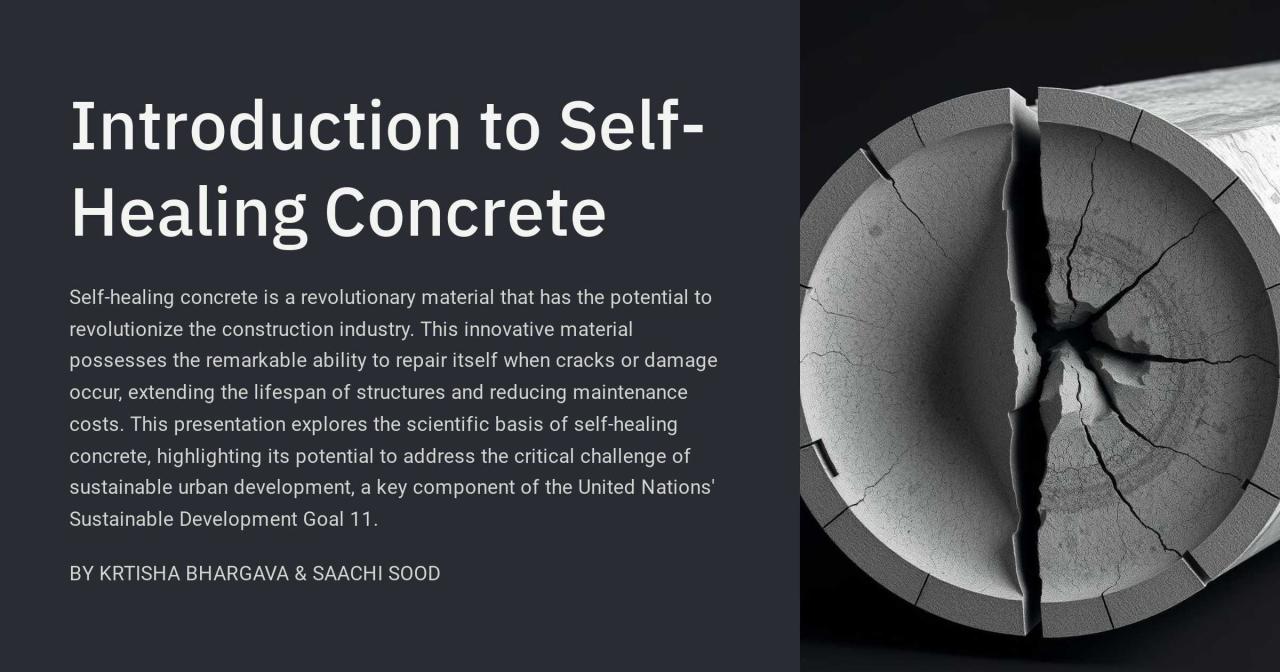
For millennia, concrete has been the silent, stoic skeleton of human civilization. From the awe-inspiring Pantheon in Rome to the towering skyscrapers of modern metropolises, its strength and durability have shaped our built environment. Yet, this ubiquitous material harbors a fundamental flaw: it cracks. These fissures, born from stress, weather, and time, are not merely superficial blemishes. They are open invitations to water, corrosive salts like chlorides, and carbon dioxide, which seep in and attack the steel reinforcement within, leading to catastrophic structural decay. The global cost of monitoring, maintaining, and repairing this concrete degradation runs into trillions of dollars annually, draining public budgets and jeopardizing safety.
However, a quiet revolution is brewing within laboratories and construction sites worldwide. We are standing at the precipice of a paradigm shift, moving from passive, reactive repair to active, intrinsic healing. This is the era of self-healing concrete a groundbreaking class of smart materials that promise to transform infrastructure from a perishable liability into a resilient, long-lasting asset. This article delves deep into the science, mechanisms, economic implications, and future trajectory of this revolutionary technology.
The Inherent Vulnerability of Traditional Concrete
To appreciate the breakthrough, one must first understand the problem. Traditional concrete, while strong in compression, is brittle and weak in tension. Embedded steel rebars compensate for this, but when microcracks (typically less than 0.2 mm wide) form and interconnect, they create pathways for deleterious agents. The corrosion of steel expands its volume, spalling the concrete cover and accelerating failure. Conventional repair methods are often temporary, disruptive, and labor-intensive, constituting a significant portion of the global construction industry’s carbon footprint due to constant material replacement and traffic delays from repair works.
The Core Mechanisms of Autonomic Healing
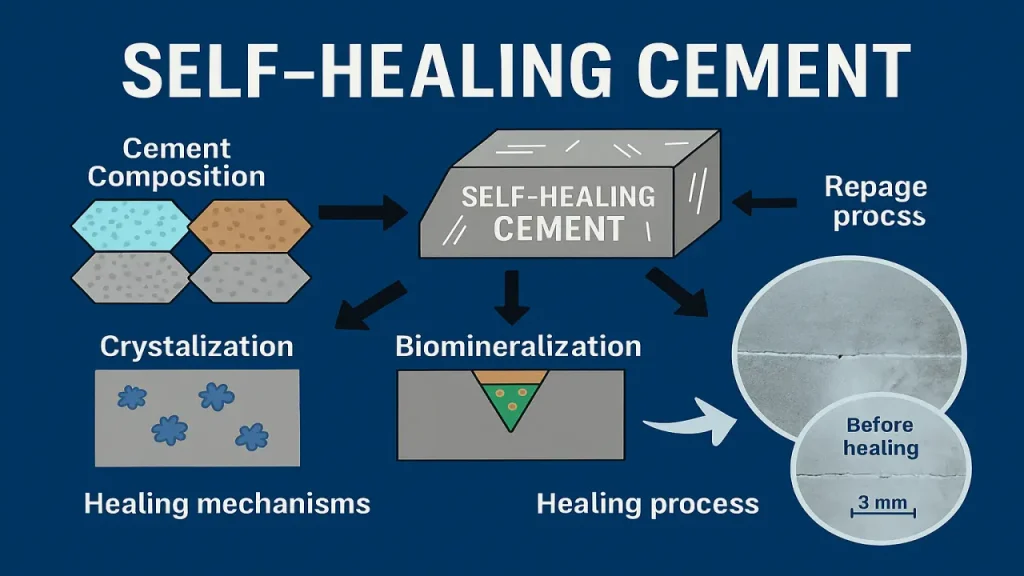
Self-healing concrete mimics biological processes, endowing an inanimate material with a form of “metabolism” to repair damage. The primary advanced strategies can be categorized as follows:
A. Bacteria-Based Self-Healing: The Bio-Concrete Phenomenon
Pioneered notably by researchers like Hendrik Jonkers at Delft University of Technology, this method harnesses the power of microbes. Specially selected alkali-resistant, spore-forming bacteria (such as Bacillus pseudofirmus or Sporosarcina pasteurii) and their food source (often calcium lactate) are encapsulated into protective carriers like biodegradable clay pellets or hydrogel capsules and mixed into the concrete during batching.
-
The Healing Process: When a crack forms and water infiltrates, it dissolves the capsules. The dormant bacterial spores germinate, metabolize the nutrient, and trigger a biochemical reaction that precipitates calcium carbonate (limestone) as a metabolic byproduct. This mineral seamlessly fills the crack, restoring water-tightness and strength. The process is particularly effective for cracks up to 0.8 mm wide and represents a sublime synergy between biology and material science.
B. Capsule-Based and Vascular Healing Systems
Inspired by the human body’s circulatory system, these approaches rely on physical containers that release healing agents upon fracture.
-
Capsule-Based (Discrete): Microcapsules (made from glass, polymer, or ceramics) containing polymers like epoxy, cyanoacrylate, or silicate-based healing agents are dispersed in the concrete mix. Crack propagation ruptures these capsules, releasing the agent which polymerizes upon contact with a catalyst (also pre-embedded in the mix), gluing the crack faces together. This method offers a single healing cycle at the specific damaged location.
-
Vascular Networks (Continuous): More advanced systems incorporate three-dimensional networks of hollow tubes or capillaries (like glass or polymer fibers) filled with healing agent. Similar to blood vessels, a crack anywhere in the structure can break these channels, releasing the agent. The major advantage is the potential for multiple healing events over the structure’s lifespan, as the network can be replenished.
C. Intrinsic and Mineral-Based Healing
This leverages the concrete’s own innate chemistry. Specific additives, such as expansive agents or crystalline admixtures, are included in the cementitious matrix.
-
Mechanism: Upon water ingress through cracks, these additives undergo further hydration or crystallization, producing insoluble compounds that block the pores and cracks. While less autonomous than bacterial or capsule methods, it is often simpler and more cost-effective to implement on a large scale, enhancing the material’s natural autogenous healing capacity.
Comparative Analysis of Self-Healing Methodologies
| Mechanism | Healing Agent | Trigger | Healing Cycles | Max Crack Width | Key Advantage | Primary Challenge |
|---|---|---|---|---|---|---|
| Bacterial | Bacterial spores, nutrients | Water ingress | Multiple (if spores remain) | ~0.8 mm | Eco-friendly, produces durable limestone | Long-term spore viability, higher initial cost |
| Capsule-Based | Polymers (e.g., epoxy) | Capsule rupture | Single | ~0.5 mm | Rapid, high-strength repair | Localized healing, dispersion issues in mix |
| Vascular | Liquid healing agents | Network fracture | Multiple (replenishable) | Varies | Repeatable healing, larger repair volume | Complex installation, risk of clogging |
| Intrinsic/Mineral | Un-hydrated cement, additives | Water & CO₂ ingress | Multiple | ~0.3 mm | Seamless integration, low-tech | Limited to finer cracks, slower process |
The Transformative Economic and Environmental Impact
The adoption of self-healing concrete is not merely a technical novelty; it is an economic and environmental imperative.
A. Drastic Lifecycle Cost Reduction: While the upfront material cost can be 10-50% higher than conventional concrete, the lifecycle savings are profound. It dramatically reduces the need for inspections, maintenance patches, and major rehabilitations. Infrastructure assets like bridges, tunnels, and marine structures could see their service lives extended by decades, deferring or eliminating billions in replacement costs. For Google AdSense-supported publishers in the construction and engineering niche, this presents a golden opportunity. High-value, long-form content exploring these cost-benefit analyses for specific projects attracts a professional audience, driving premium ad rates and affiliate marketing opportunities for construction software, sensor technology, and advanced materials.
B. Sustainability and Carbon Footprint Mitigation: Cement production is responsible for approximately 8% of global CO₂ emissions. By doubling or tripling the functional life of structures, self-healing concrete drastically reduces the frequency of reconstruction and the associated carbon emissions from manufacturing new cement, transporting materials, and demolition waste. Furthermore, bacterial concrete often uses industrial by-products as nutrients, promoting a circular economy. Content focusing on this green aspect performs exceptionally well in SEO, aligning with searches for “sustainable construction,” “green infrastructure,” and “carbon-neutral building materials.”
C. Enhanced Safety and Structural Resilience: This technology is pivotal for critical infrastructure in seismically active zones or harsh environments. Automatic crack repair maintains structural integrity, preventing minor damage from escalating into catastrophic failure. It also enhances the durability of underground repositories for nuclear waste or submerged structures like offshore wind turbine foundations.
Current Projects, Real-World Applications, and Future Trajectory
The technology is rapidly transitioning from lab to field. Notable applications include:
-
The Netherlands has led with several pilot projects, including a bacteria-based concrete bike path in Brabant and self-healing repairs on a historic lighthouse.
-
The UK has seen the application of vascular networks in sections of the M4 motorway.
-
Japan is actively researching and implementing various self-healing technologies for its extensive and aging infrastructure network.
The future lies in multifunctional, intelligent composites. Researchers are working on integrating nano-materials like graphene for enhanced conductivity (enabling crack detection), combining different healing mechanisms for synergistic effects, and developing bio-inspired materials that can respond to various stimuli. The ultimate goal is a “living” concrete that can sense stress, report damage, and heal itself repeatedly.
Conclusion: Building a Self-Sustaining Future
Self-healing concrete represents more than an incremental improvement; it is a fundamental rethinking of what construction materials can be. By bestowing upon concrete the biological gift of self-repair, we are not just patching cracks we are building a legacy of resilience. We are constructing infrastructure that can withstand the tests of time and nature with minimal human intervention, freeing up economic resources, protecting our planet, and safeguarding future generations. The revolution is no longer confined to scientific papers; it is being poured, molded, and built into the very foundations of our future world. For content creators, this field is a rich, evolving vein of material, perfectly positioned to attract high-intent traffic through strategic SEO focused on the future of construction, smart materials, and sustainable engineering, thereby maximizing digital revenue streams while educating a global audience.