The global organ transplant crisis is a stark reality of modern medicine. Thousands of patients languish on waiting lists, with a significant portion dying before ever receiving a life-saving call. This chronic shortage of viable donor organs has propelled scientists and medical researchers into the frontiers of regenerative medicine, where a revolutionary technology promises to reshape the future of healthcare: three-dimensional bioprinting of human organs. Far beyond the realm of science fiction, bioprinting is an intricate process of fabricating biological structures layer by layer, using living cells as “bioink.” This comprehensive article delves into the sophisticated mechanics of bioprinting, explores its groundbreaking potential for organ transplantation, navigates the formidable challenges it faces, and envisions the profound ethical and societal implications of a future where organs can be manufactured on demand.
Understanding the Core: What is 3D Bioprinting?
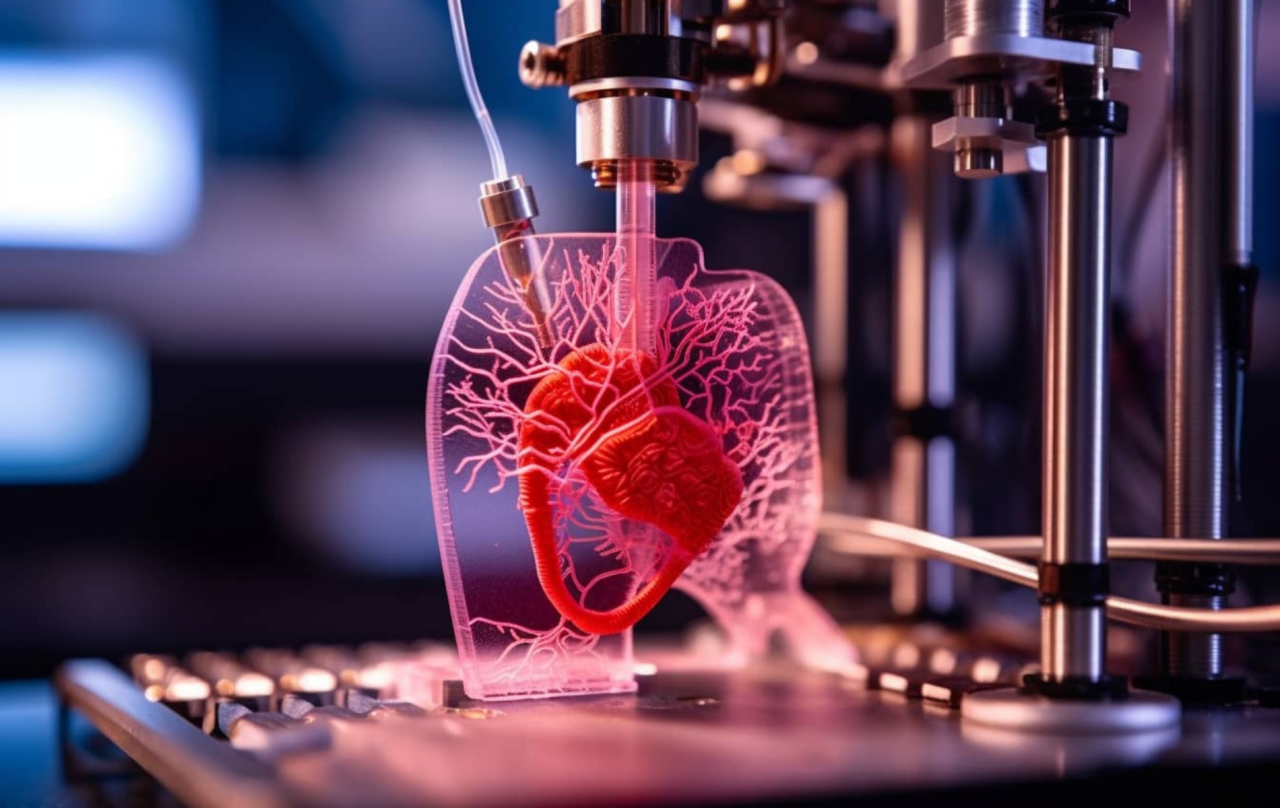
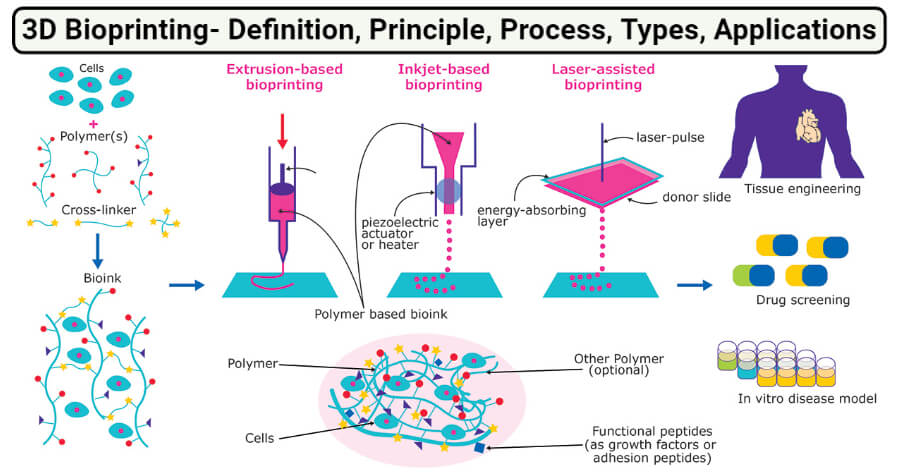
At its essence, 3D bioprinting is an additive manufacturing process adapted for biological materials. While conventional 3D printers build objects from plastics or metals, bioprinters deposit layers of living cells, biomaterials, and growth factors to construct complex, three-dimensional tissue structures. The ultimate goal is not just to create a static scaffold but to engineer a dynamic, living organ that can integrate seamlessly with a recipient’s body. The process is a multi-stage symphony of biology and engineering:
A. Pre-Bioprinting: The Digital and Biological Blueprint
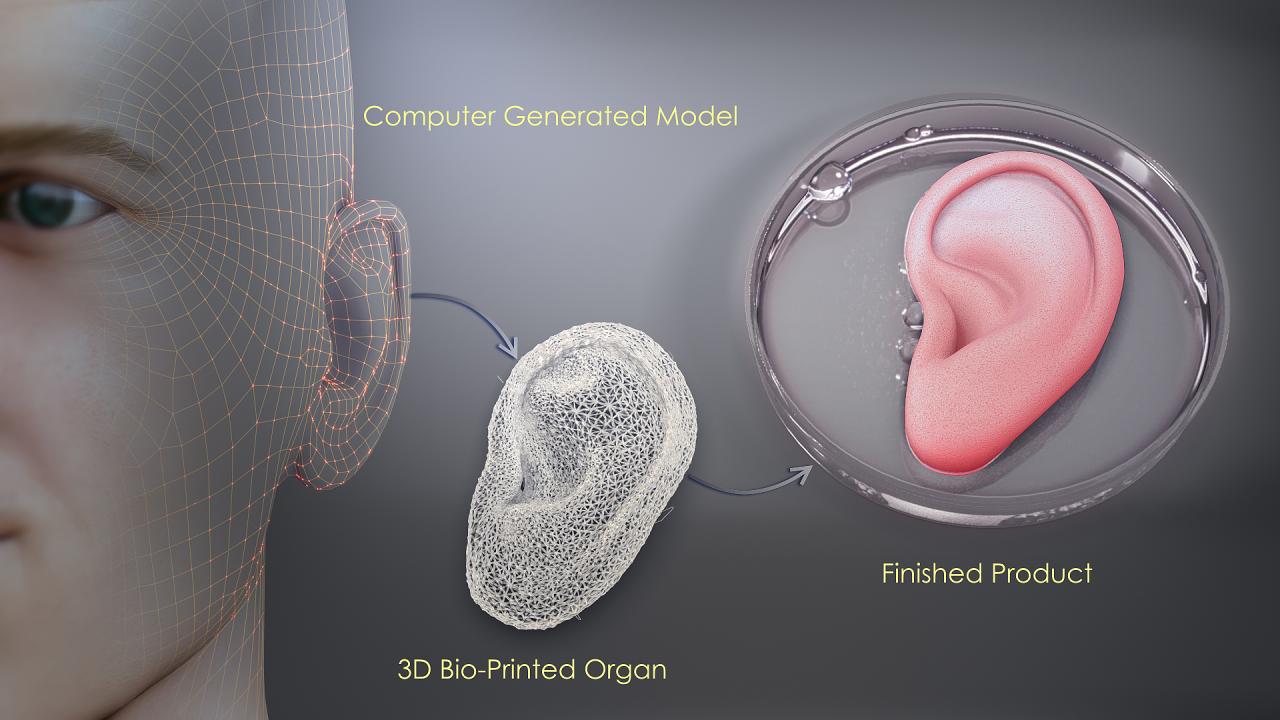
This foundational stage involves two critical steps. First, advanced imaging techniques like MRI or CT scans are used to create a high-resolution digital model of the target organ, capturing its intricate internal and external architecture. Second, and most crucial, is sourcing and preparing the bioink. This is typically derived from the patient’s own cells (autologous cells), obtained via a small biopsy. These cells are then cultured and multiplied in a lab to create the billions needed for printing. The bioink itself is often a hydrogel laden with these cells a nurturing, gelatinous substance that provides structural support and essential nutrients.
B. The Bioprinting Process: Deposition Techniques
Several sophisticated technologies guide the placement of bioink, each with specific advantages:
-
Inkjet-Based Bioprinting: Similar to desktop inkjet printers, this method uses thermal or piezoelectric forces to eject tiny droplets of bioink onto a substrate. It’s fast and cost-effective for creating simple tissue structures.
-
Extrusion-Based Bioprinting: The most common technique, where bioink is dispensed continuously through a nozzle using mechanical pressure. It allows for high cell density and the printing of robust, larger structures, making it ideal for creating organ-sized constructs.
-
Laser-Assisted Bioprinting: A nozel-free technique where a laser pulse focuses on a ribbon coated with bioink, vaporizing a small area beneath it and propelling a cell-laden droplet onto a substrate below. It offers exceptional precision and cell viability, suitable for delicate structures.
C. Post-Bioprinting: Maturation into a Functional Organ
The freshly printed structure, known as a “bioconstruct,” is far from a finished organ. It is transferred to a bioreactor a sophisticated device mimicking the human body’s environment. Here, it undergoes a crucial maturation period. The bioreactor provides essential cues: mechanical stimulation (like pulsing for a heart tissue), precise temperature control, nutrient perfusion, and gas exchange. This stage encourages the cells to communicate, self-organize, and form the complex vascular networks and extracellular matrix necessary for true physiological function.
The Promise: Revolutionizing Transplantation and Beyond
The successful maturation of bioprinted organs would herald a paradigm shift in medicine, with impacts stretching far beyond transplantation.
A. Eradicating the Organ Waiting List and Transplant Rejection
The most direct impact would be solving the donor organ shortage. Organs could be printed as needed, eliminating agonizing waits. Furthermore, using a patient’s own cells to create the bioink means the resulting organ is genetically identical to the recipient. This autologous origin dramatically reduces, if not eliminates, the risk of immune rejection, potentially allowing patients to avoid a lifetime of harsh immunosuppressive drugs and their debilitating side effects.
B. Personalized Medicine and Drug Development
Bioprinted tissues offer a transformative tool for pharmaceutical research. Instead of testing drugs on animal models that often poorly predict human response, companies could use miniature, functional versions of human livers, hearts, or kidneys “organs-on-chips” to test for efficacy and toxicity with unprecedented accuracy. This accelerates drug discovery, reduces costs, and moves us closer to the goal of personalized drug regimens based on a patient’s specific tissue response.
C. Complex Disease Modeling and Surgical Planning
Researchers can bioprint diseased tissue, such as a tumor microenvironment or a section of a cirrhotic liver, to study disease progression and test novel therapies in a controlled, human-relevant system. Additionally, surgeons can use patient-specific, bioprinted anatomical models for pre-operative planning and practice, especially for rare or complex cases, increasing surgical precision and safety.
The Daunting Hurdles: Technical and Biological Challenges
Despite breathtaking progress, the road to printing a fully functional, complex solid organ like a heart, liver, or kidney is paved with immense scientific obstacles.
A. Vascularization: The Lifeline of the Organ
The single greatest challenge is creating a functional, hierarchical vascular network. Every cell in an organ must be within 200 micrometers of a capillary to receive oxygen and nutrients. Printing these microscopic, multi-branched blood vessels that can integrate with the host’s circulatory system remains a monumental task. Without this, any large, thick tissue will quickly necrotize at its core.
B. Achieving Multi-Cellular Complexity and Function
Organs are not homogenous; they comprise multiple cell types arranged in a precise spatial architecture. A liver, for instance, contains hepatocytes, Kupffer cells, and stellate cells, all organized around bile canaliculi. Reproducing this intricate cellular ecosystem and ensuring the different cell types communicate and coordinate to perform the organ’s full suite of functions is an enormous biological puzzle.
C. Biomaterial and Bioink Limitations
The ideal bioink must be a versatile material: printable, structurally supportive, biodegradable at the right pace, and bioactive to encourage cell growth and function. Developing such “smart” biomaterials that can also facilitate the formation of nerves and lymphatic vessels within the bioprinted structure is an active area of research.
D. Scalability and Regulatory Pathways
Scaling up from printing patches of tissue to full-size, durable human organs requires advancements in printing speed, resolution, and bioreactor technology. Furthermore, regulatory bodies like the FDA face the unprecedented task of developing approval frameworks for living, manufactured organs a process that must be rigorous enough to ensure safety but agile enough to foster innovation.
The Ethical and Societal Landscape
The advent of bioprintable organs will force society to confront profound ethical questions that must be addressed proactively.
A. Accessibility and Equity: A Cure for the Wealthy?
There is a legitimate fear that this technology, initially, will be exorbitantly expensive. Without careful policy planning, it could create a medical apartheid where only the wealthy can access life-saving bioprinted organs, exacerbating existing healthcare disparities. Global discourse must focus on insurance models, government funding, and pathways to make this a universally accessible therapy.
B. The “Printing” of Life and Intellectual Property
The act of creating a living organ from a patient’s own cells blurs philosophical lines. While using autologous cells alleviates many ethical concerns, questions arise if genetically modified or universal donor cell lines are used. Furthermore, who owns the blueprint for a standard human liver? The complexities of patenting biological processes and living constructs will be a legal battleground.
C. Long-Term Impacts on Donation and the Human Body
A successful bioprinting industry could eventually render traditional organ donation obsolete. While this addresses the shortage, it may inadvertently diminish a profound act of human altruism. Additionally, the ability to replace organs might influence perceptions of bodily responsibility and longevity, potentially leading to new forms of enhancement beyond therapeutic use.
Conclusion: A Measured March Toward a New Era
Bioprinting human organs for transplantation represents one of the most ambitious and hopeful endeavors in modern science. It stands at the convergence of biology, engineering, computer science, and medicine. While the vision of walking into a hospital to order a replacement heart remains on the horizon, significant milestones are being achieved daily from bioprinted skin for burn victims and corneal tissue for transplants to vascularized lung alveoli and cardiac patches for repairing damaged hearts. The journey forward requires sustained interdisciplinary collaboration, substantial investment, and thoughtful public dialogue on ethics and access. The goal is clear: to move from treating end-stage organ failure with scarce donor organs to routinely restoring health with personalized, readily available bioprinted solutions. This is not merely an evolution in transplant surgery; it is a revolution in how we conceive of healing and the very fabric of human life itself.