
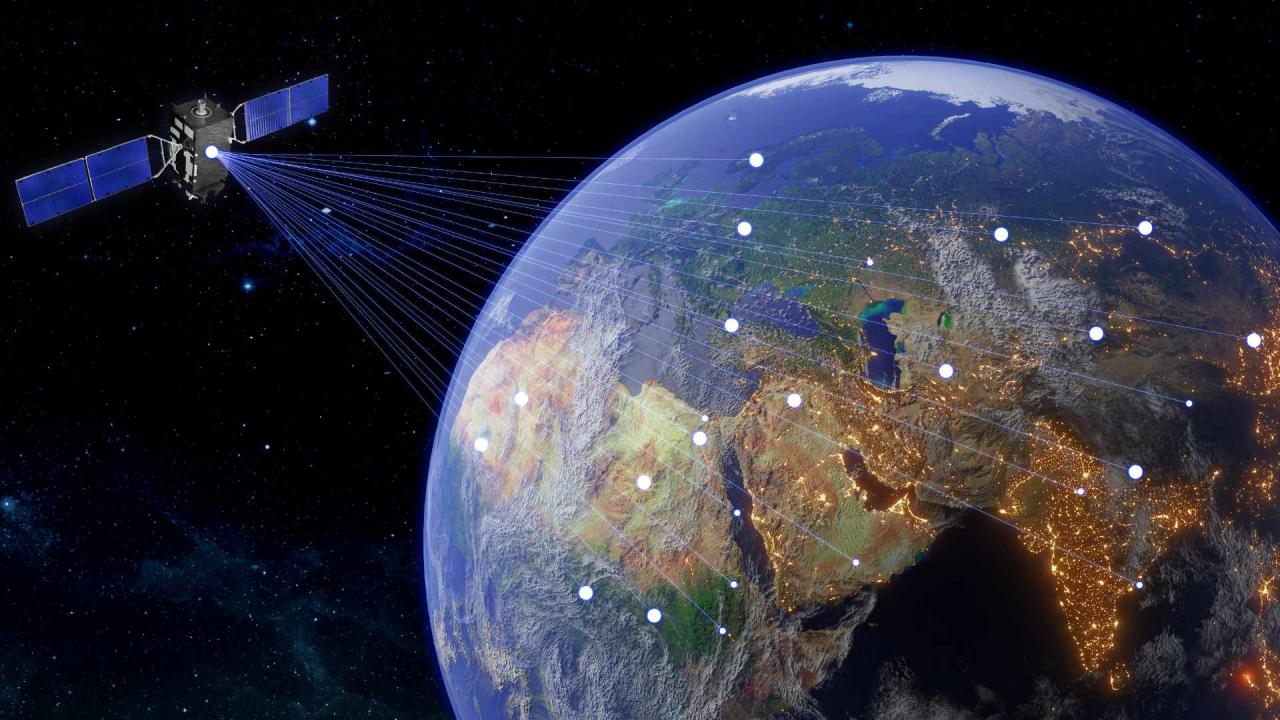
For decades, the digital divide has been a stark and persistent reality. Vast swathes of our planet, from remote mountain villages and isolated farmsteads to ships traversing the open ocean and nomadic communities, have remained shrouged in “internet deserts.” These are regions where terrestrial infrastructure fiber-optic cables, cell towers, and DSL lines is economically or geographically impractical to deploy, leaving billions with limited or zero connectivity. This deprivation isn’t merely an inconvenience; it translates to stunted economic opportunity, restricted access to education and telemedicine, and profound informational isolation. However, a revolutionary shift is now underway, not from the ground up, but from the skies down. The rapid deployment of next-generation Low Earth Orbit (LEO) satellite networks is poised to definitively eliminate these digital deserts, ushering in an era of truly global, ubiquitous broadband internet.
This transformation is being driven by a new space race, led by private enterprises like SpaceX’s Starlink, OneWeb, Amazon’s Project Kuiper, and others. Unlike traditional geostationary (GEO) satellites that orbit at about 35,786 kilometers, these new constellations comprise thousands of small, mass-produced satellites orbiting at altitudes between 500 and 2,000 kilometers. This fundamental architectural difference is the key to their disruptive potential.
The Technical Leap: How LEO Constellations Outpace Traditional Systems
To appreciate the revolution, one must understand the limitations of the old paradigm. Traditional satellite internet relied on a handful of large, expensive satellites in GEO. Their immense distance caused high latency (the delay in data transmission), often exceeding 600 milliseconds, making real-time applications like video calls, online gaming, and live financial trading frustrating or impossible. Furthermore, their limited number created capacity bottlenecks, offering low data caps and sluggish speeds for users.
LEO constellations shatter these constraints through a multi-faceted approach:
A. Proximity and Reduced Latency: Orbiting much closer to Earth, LEO satellites dramatically cut signal travel time. Latency for services like Starlink is consistently measured between 20ms and 50ms comparable to, and sometimes better than, terrestrial cable and fiber in many areas. This enables seamless video conferencing, cloud computing, and interactive online experiences previously unthinkable for remote users.
B. Massive Constellation Density: By deploying not dozens, but thousands or even tens of thousands of satellites, these networks create a web of overlapping coverage. As one satellite moves beyond the horizon, a user’s signal is seamlessly handed off to the next, ensuring continuous, uninterrupted service. This density massively increases total network capacity and reliability.
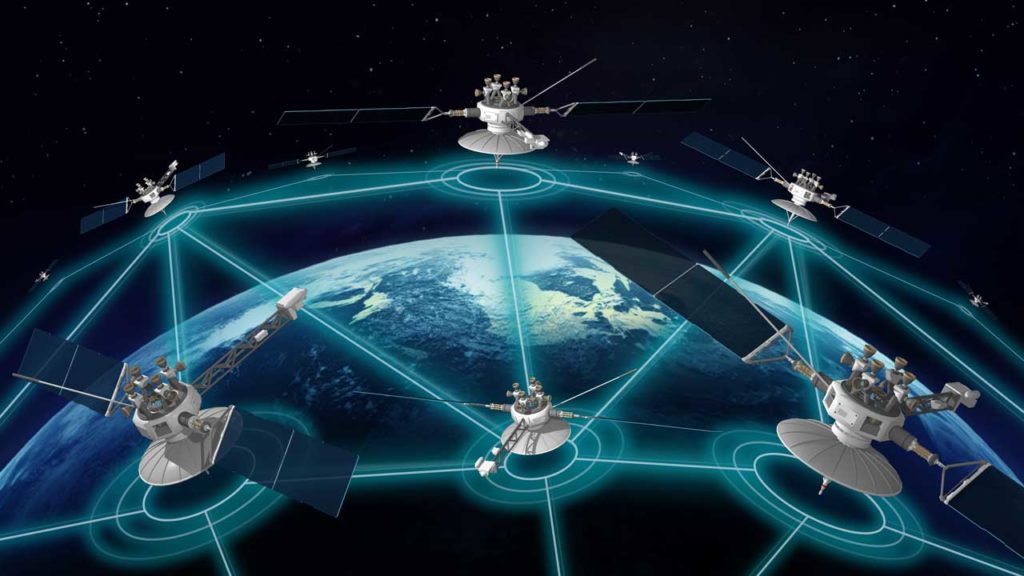
C. Advanced Inter-Satellite Links (ISLs): Perhaps the most groundbreaking innovation is the use of laser links between the satellites themselves. Instead of data traveling from a user to a satellite, down to a ground station, then back through the internet, it can now be routed through space via these laser links, hopping from satellite to satellite until it reaches a ground station near the destination. This creates a high-speed data backbone in the sky, further reducing latency and dependency on a dense global network of ground infrastructure.
D. User Terminal Innovation: User access has been simplified with phased-array antennas (often called “satellite dishes,” though they have no moving parts). These sleek, user-installable devices electronically steer beams to track satellites moving swiftly across the sky, maintaining a stable, high-throughput connection without manual adjustment.
The Multifaceted Impact: Beyond Basic Connectivity
The provision of high-speed, low-latency internet to the world’s most inaccessible corners will catalyze transformative change across numerous sectors:
A. Revolutionizing Education and Telemedicine: Remote schools can access cloud-based curricula, virtual laboratories, and global libraries. Students can participate in interactive, live-streamed classes. In healthcare, telemedicine will become truly viable. High-definition video consultations, real-time transmission of diagnostic images (like X-rays and ultrasounds), and remote patient monitoring will bring specialist care to underserved clinics and homes, saving lives and reducing the burden of medical travel.
B. Supercharging Global Commerce and Agriculture: Isolated businesses, artisans, and farms can integrate into the global digital marketplace. Real-time inventory management, e-commerce platforms, and digital payment systems become accessible. Precision agriculture, reliant on IoT sensors, drone data, and real-time weather analytics, can be deployed anywhere, optimizing yields and resource use. Rural economies can diversify and thrive.
C. Enhancing Logistics, Maritime, and Aviation Connectivity: The aviation and shipping industries, long dependent on expensive and limited systems, will be transformed. Airlines can offer true in-flight broadband, enhancing passenger experience and enabling real-time aircraft health monitoring. Merchant ships and fishing vessels can maintain constant, reliable communication for navigation, operations, and crew welfare, improving safety and efficiency.
D. Empowering Crisis Response and Humanitarian Aid: In the immediate aftermath of natural disasters hurricanes, earthquakes, floods terrestrial communication networks are often the first casualties. Portable satellite user terminals can be deployed in hours, providing first responders with critical communication links and affected populations with a lifeline to coordinate aid and contact loved ones, long before ground infrastructure is restored.
E. Supporting Scientific Research and Environmental Monitoring: Research stations in the Arctic, Antarctic, deep in rainforests, or on volcanic islands can transmit vast datasets, participate in live collaborations, and access computational resources in real-time. Environmental monitoring networks tracking deforestation, wildlife migration, or glacial melt can stream data continuously from any point on the globe.
Confronting the Challenges: The Road to Sustainable Ubiquity
The promise is immense, but the path is not without significant hurdles that must be conscientiously managed:
A. Space Sustainability and Orbital Debris: The crowding of LEO with thousands of satellites raises legitimate concerns about collision risks and the generation of space debris. Operators are developing and implementing measures like automated collision avoidance systems, using orbits that naturally decay at end-of-life, and designing satellites for complete atmospheric disintegration. International regulatory frameworks, like those spearheaded by the ITU and FCC, are evolving to mandate responsible behavior, but global cooperation and enforcement remain critical.
B. Astronomical Interference: The bright trails of LEO satellites have profoundly disrupted ground-based astronomical observations, particularly wide-field surveys crucial for detecting near-Earth asteroids and studying distant galaxies. Companies are now testing mitigation strategies such as sunshades (visors), dark coatings, and changing satellite orientation to minimize reflectivity. The astronomy community and satellite operators are engaged in an ongoing, essential dialogue to find a balance, though a perfect solution remains elusive.
C. Economic Accessibility and the Digital Divide’s New Phase: While the technology bypasses infrastructure costs, the current user terminal and subscription fees, often over $500 for hardware and $100+ monthly, are still prohibitive for the world’s poorest. The digital divide may evolve from an access divide to an affordability divide. Solutions will require innovative financing models, public-private partnerships, governmental subsidies for critical services (like schools and clinics), and economies of scale driving down costs over time.
D. Regulatory and Ground Infrastructure Hurdles: Gaining landing rights and spectrum licenses in every country is a complex, politically fraught process. Furthermore, the network still requires a global mesh of gateway ground stations with fiber connections to the terrestrial internet. While fewer are needed than for cellular networks, their deployment, especially in geopolitically sensitive or remote regions, presents logistical and regulatory challenges.
The Future Landscape: Integration and Evolution
Looking ahead, satellite broadband will not operate in a vacuum. Its true power will be realized through integration with existing and emerging technologies:
A. 5G and IoT Convergence: Future 6G standards are already considering satellite networks as an integral component. LEO constellations will provide backhaul for remote 5G towers and direct-to-device connectivity, enabling seamless service for the Internet of Things (IoT) across oceans, deserts, and airspace, creating a genuinely unified global network.
B. A Dynamic and Competitive Market: The entrance of major players like Amazon will intensify competition, driving innovation, lowering prices, and improving service quality. This competition will also spur specialization, with networks potentially tailoring services for specific sectors like government, maritime, or residential use.
C. The Long-Term Vision: A Connected Planet: The endgame is a world where geographic location is no longer a determinant of connectivity quality. This has profound implications for globalization, remote work, cultural exchange, and knowledge dissemination. It could enable new forms of digital nomadism, decentralize tech hubs, and provide a universal platform for innovation, regardless of where an innovator is born.
In conclusion, the advent of mega-constellations of LEO satellites represents a paradigm shift in global communications, arguably as significant as the advent of undersea cables or communication satellites themselves. While formidable challenges in sustainability, accessibility, and regulation persist, the trajectory is clear. The technical barriers that once made internet deserts a permanent fixture of our world are being dismantled, beam by beam, from low Earth orbit. We are transitioning from an era of selective connectivity to one of inclusive, planetary-scale access. The task ahead is to ensure this powerful tool is deployed responsibly, managed sustainably, and made equitable, so that the benefits of a connected world truly reach every corner of the globe, finally and irrevocably eliminating the last internet deserts.