
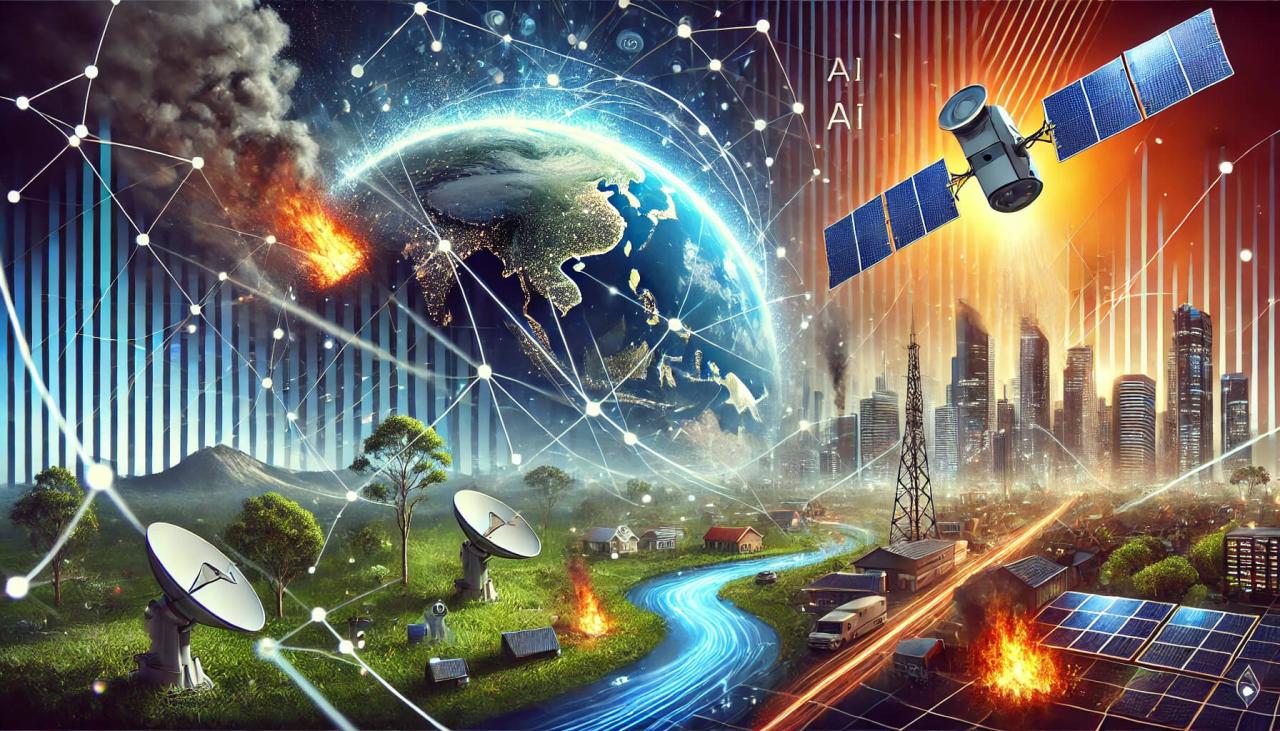
For centuries, humanity has stood largely powerless against the raw, formidable force of natural disasters. Earthquakes, tsunamis, hurricanes, and wildfires have struck with little warning, leaving behind trails of devastation, economic ruin, and immeasurable human suffering. Traditional prediction methods, relying on historical data and observable physical precursors, have often fallen short, providing either insufficient lead time or ambiguous signals. However, we are now at the precipice of a paradigm shift. The convergence of artificial intelligence (AI), machine learning (ML), and big data analytics is ushering in a new era of proactive disaster resilience. This transformative technology is not about claiming infallible prophecy but about drastically enhancing our capacity for early warning systems, risk assessment, and ultimately, saving lives. This article delves deep into how AI is being engineered to predict natural catastrophes, the multifaceted technologies powering this revolution, the ethical labyrinth it navigates, and the profound implications for global safety and security.
The Foundational Pillars: How AI Processes the Earth’s Signals
At its core, AI for disaster prediction is a data-hungry behemoth. It thrives on vast, diverse datasets, learning to recognize complex, non-linear patterns that elude human analysts and conventional statistical models. The process rests on several key technological pillars:
A. Machine Learning and Deep Learning Algorithms: These are the brains of the operation. ML models, particularly deep learning neural networks, are trained on petabytes of historical disaster data. They learn the subtle geophysical and atmospheric fingerprints that precede an event. For instance, Recurrent Neural Networks (RNNs) and Long Short-Term Memory (LSTM) networks excel at analyzing time-series data, making them ideal for tracking seismic tremors or atmospheric pressure changes over time.
B. Multimodal Data Integration: AI’s true power lies in its ability to synthesize disparate data streams into a coherent predictive picture. This includes:
* Satellite and Remote Sensing Data: High-resolution imagery from satellites like Sentinel and Landsat provides real-time data on land deformation, vegetation dryness, sea surface temperature, and cloud formation.
* Seismic and Geophysical Sensor Networks: Data from global networks of seismometers, GPS stations, and ocean buoys feed AI models information on crustal movements, ground displacement, and wave patterns.
* Atmospheric and Oceanic Models: AI enhances traditional meteorological and oceanic models by ingesting data from weather stations, radar, and sonar, improving forecasts for hurricanes, floods, and storm surges.
* Social Media and Crowdsourced Data: In a novel approach, AI can analyze real-time text and image data from platforms like Twitter or dedicated apps to gain ground-truth situational awareness during developing crises.
C. High-Performance Computing (HPC) and Cloud Infrastructure: The immense computational demand of training these complex models and processing real-time data flows is met by HPC clusters and scalable cloud platforms. This allows for near-instantaneous analysis, which is critical when every second counts.
Application Across Disaster Types: A Detailed Breakdown

AI’s application is not monolithic; it is uniquely tailored to the physics of each disaster type.
1. Earthquakes: The Holy Grail of Prediction
While short-term, precise earthquake prediction remains elusive, AI is making significant strides in forecasting probabilistic seismic hazards. Models analyze decades of seismic data to identify subtle stress patterns and foreshock clusters. Researchers have had success using AI to predict aftershock locations by learning the complex stress interactions in fault lines. Furthermore, AI can provide crucial seconds to minutes of warning by detecting the fast-moving, less-damaging primary (P) waves from sensor networks and predicting the arrival time and intensity of the slower, destructive secondary (S) waves, enabling automated shutdowns of critical infrastructure.
2. Tsunamis: From Detection to Instant Impact Modeling
Upon detecting a submarine earthquake or landslide, AI algorithms rapidly calculate the event’s parameters (magnitude, location, depth). They then cross-reference this with high-resolution bathymetric maps to model multiple tsunami propagation scenarios in seconds far faster than traditional methods. This provides accurate estimates of arrival times and wave heights for specific coastlines, allowing for targeted, efficient evacuations.
3. Hurricanes, Cyclones, and Typhoons
AI models are revolutionizing intensity and track forecasting. By analyzing satellite imagery patterns of storm structure, sea surface temperatures, and wind shear, ML algorithms can predict rapid intensification a major forecasting challenge. Companies and agencies now use AI ensembles that often outperform the leading traditional meteorological models in predicting a storm’s path days in advance.
4. Wildfires: Predicting Ignition and Spread
AI wildfire models integrate satellite data on vegetation moisture (fuel), historical weather patterns, real-time humidity and wind forecasts, and even anonymized human activity data. This allows for the creation of high-resolution fire risk maps. During a fire, AI can predict the fire’s spread direction and speed by simulating countless scenarios based on real-time wind changes and terrain, guiding firefighting resource deployment and evacuation orders.
5. Floods: Precision Inundation Forecasting
For riverine floods, AI analyzes rainfall data from weather models and ground sensors, soil saturation levels, and topography. It can predict peak water levels and precise flood extents for urban areas, down to street-level details. For flash floods, AI’s ability to quickly process radar data and identify intense, stationary rainfall cells is invaluable for issuing hyper-localized warnings.
The Human and Operational Impact: Beyond the Algorithm
The value of AI prediction is fully realized only when seamlessly integrated into human decision-making frameworks.
A. Supercharging Early Warning Systems: AI enables next-generation warning systems that are faster, more accurate, and geographically precise. This reduces false alarms, which erode public trust, and ensures warnings reach the right people via the right channels (cell broadcast, sirens, apps).
B. Optimizing Evacuation and Response: AI doesn’t just predict the disaster; it can model evacuation traffic flows, identify optimal evacuation routes in real-time, and pinpoint areas where populations may be vulnerable or require assisted evacuation. This allows for staged, smart evacuations that reduce gridlock and save critical time.
C. Infrastructure Resilience and Planning: Urban planners and engineers use AI-derived hazard risk maps to inform building codes, decide land-use zoning, and harden critical infrastructure like power grids, hospitals, and bridges against predicted threats.
The Critical Challenges and Ethical Imperatives
This powerful technology is not without its significant hurdles and moral questions.
A. The “Black Box” Problem: Many advanced AI models are opaque. Understanding why an AI predicted a disaster is as crucial as the prediction itself for gaining the trust of scientists, emergency managers, and the public. Explainable AI (XAI) is a growing field aimed at making these decisions interpretable.
B. Data Inequality and the Global Divide: The most disaster-vulnerable regions often lack the dense sensor networks and data infrastructure needed to train accurate local models. This risks creating a prediction gap, where AI protects wealthy nations while leaving developing countries behind. Global collaboration and data-sharing initiatives are essential.
C. False Alarms and the Cry-Wolf Effect: An over-sensitive AI that triggers false evacuations can have severe economic costs and lead to public complacency. Calibrating models for an optimal balance between sensitivity and specificity is a continuous challenge.
D. Privacy and Surveillance: Using social media and mobile data for crowdsourced early warnings raises serious privacy concerns. Clear governance frameworks are needed to ensure data is used ethically, anonymized, and solely for humanitarian purposes.
E. Liability and Decision Authority: If an AI prediction is ignored or acted upon, who is liable for the consequences? The role of AI must be clearly defined as a decision-support tool, with ultimate authority and accountability resting with human emergency managers and government officials.
The Future Horizon: Integrating AI into a Resilient Society
The trajectory points toward an increasingly integrated and sophisticated use of AI. Future developments may include:
-
The Digital Twin Earth: A high-fidelity, AI-powered replica of the planet’s physical systems, continuously updated with real-time data, allowing for unparalleled simulation and forecasting of complex disaster interactions.
-
Autonomous Response Systems: In limited contexts, AI could trigger automatic responses diverting floodwaters via smart dams, isolating segments of the power grid, or deploying emergency drones for assessment.
-
Decentralized AI on IoT Devices: Moving some analysis to the “edge,” using AI on local sensors and devices, could provide ultra-fast warnings even if communication networks are disrupted.
Conclusion: A Tool for Hope, Guided by Human Wisdom
Artificial intelligence in natural disaster prediction represents one of the most humane applications of technology. It is a tool that empowers us to move from a stance of fearful reaction to one of informed preparedness. While it is not a crystal ball, it is a formidable ally in our ancient struggle against nature’s extremes. The ultimate goal is not to avoid every disaster an impossible feat but to build societies that are anticipatory, adaptive, and resilient. Achieving this future requires not only technological innovation but also a steadfast commitment to ethical governance, global equity, and the unwavering understanding that these systems exist to augment, not replace, human judgment and compassion. The forecast, powered by AI, is increasingly one of hope.